Because We All Need a Teaching Autopilot

You know those days when everything feels like chaos? You’re teaching back-to-back, managing a lunchtime drama, handling last-minute cover work, and somewhere in the madness, you’re supposed to deliver consistently ‘good lesson’. Easy, right (Except it’s not!).
Teaching is a juggling act, and habits and routines are the safety net that keeps everything from crashing down. When we’re running on fumes—whether it’s because we’re under the weather or just trying to survive a Monday—our autopilot kicks in. The question is: How reliable is your autopilot?
I always ask myself: If I had to cover a lesson with zero preparation, how confident would I feel? If that thought makes you shudder, don’t worry—I’ve got you. Here are my three non-negotiables that will hopefully keep your classroom running smoothly, even on the most chaotic days.
1. Greet Students at the Threshold (Yes, Even When You’re Not in the Mood!)
“Hello, how are you?” Feels good, right? That little bit of human connection makes a difference. The same goes for our students.
Greeting students at the door isn’t just about being polite—it sets the tone. It makes them feel like they belong, helps you spot any off behaviours and allows you to reset the vibe before the lesson even begins. It’s also a great moment to address any lingering behaviour issues before they snowball into bigger problems.
I get it. Some days, you’re rushing to set up resources, waiting for a PowerPoint to load, or still mentally processing whatever just happened in the last lesson. But even then, stick to these minimum-effort, maximum-impact habits:
✔ Stand at the threshold—Ideally, position yourself where you can see both inside and outside the room. If that’s not possible, at least acknowledge students as they walk in.
✔ Smile and say hello—Even if it’s through gritted teeth after a long day. You are a performer.
✔ Give a simple instruction—e.g., “Starter is on the board. Get cracking with question one.”
It takes seconds but makes all the difference.
2. Make Sure Tasks Are Clear (Because believe me, sometimes they aren’t!)
We’ve all been there—you give an instruction, and within ten seconds, at least three students ask, “What are we supposed to do?” and you want to bang your head against the nearest wall.
Having clear, easy-to-follow tasks isn’t just about helping students—it saves you from repeating yourself a hundred times. (And let’s be honest, that’s a win.)
A good task should:
✔ Be crystal clear—e.g., “Step 1: Open your book. Step 2: Answer question X.” The simpler, the better.
✔ Be challenging enough—Include a mix of difficulty levels to keep all students engaged. Even use animation to motivate students!
✔ Connect to ‘prior learning’ to ‘new learning’—Use key words, sentence stems, or visuals to help them make links.
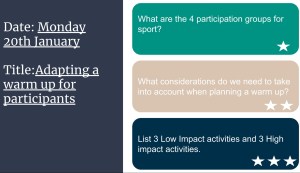
Pro tip: The clearer your task is, the easier it is to manage everything else—like doing the register, circulating, or (let’s be honest) taking a swig of your brew before it goes cold.
3. Effective Instruction (a.k.a. Getting Them to Actually Listen)
One of my golden rules. Never talk over students. Instead, I use:
“3, 2, 1… hands free, books closed, eyes on me.”
Then I pause…
Does it feel awkward? Sometimes. But you know what’s more awkward? Repeating yourself ten times because no one is actually listening.
Once you’ve got their attention, the next challenge is ensuring they’re actually absorbing what you’re saying—not just nodding like Churchill. This is where little strategies like cold calling, hinge questions, and low-stakes quizzing come in.
To keep students engaged:
✔ Ensure they’re tracking the speaker (eye contact, body language, the lot. Don’t settle for less).
✔ Limit instructions to 3-5 steps max—Ideally 3, anything more, and you’ve lost your students as well as most adults.
✔ Look for signs of active listening—No side chats, no glazed-over expressions.
The more consistent you are with this, the less you’ll have to battle for their attention.
Final Thoughts
Teaching is hard. But strong habits and routines take some of the weight off. They can turn chaos into consistency, help students know what to expect, and save your sanity when the school day feels like a whirlwind.
So, ask yourself: how solid is your teaching autopilot? If it needs a little tweaking, start with these three non-negotiables. Small changes = big wins.

 The Insightful Teacher
Leave a comment